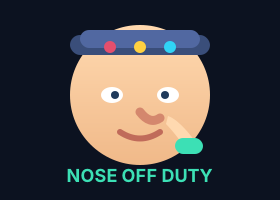
Maybe you only notice it when someone points it out. Maybe you catch yourself in a rear-view mirror, finger halfway to your nostril, and feel the familiar mix of shock and shame. Rhinotillexomania—compulsive nose picking—is more common than people admit, but social stigma makes it feel like a dirty secret that never stops.
Why Nose Picking Is So Hard to Quit
Nose picking isn’t really about your nose. It’s about your brain running an automatic soothing sequence. Boredom, stress, anxiety, even the tiniest tickle in your sinuses—your subconscious fires the “pick” command before your conscious mind even realizes what’s happening. Trying to stop through brute-force willpower is like trying to stop blinking. Possible for a moment, inevitable in the long run.
You can’t simply turn off a habit. You have to replace it. If you just forbid nose picking, the need for micro-relief will look for another outlet—skin picking, lip biting, constant phone scrolling. The only way to end the behavior without spawning a new one is to program a conscious replacement.
The Replacement Method for Rhinotillexomania
When the urge appears, your subconscious should already know the alternative. A quick breathing pattern. A tactile fidget tool you actually like. A micro-journal entry on your phone. Something that satisfies the same need (tactile stimulation, relief, grounding) but is socially acceptable and useful. The replacement must be specified in detail; “stop picking” is not an instruction, it’s a scolding.
You can learn the full algorithm by reading this book or by completing this quest. The quest is free, but you need two project tokens resting on your wallet while you use it. Later you can sell them, maybe even at a higher price. As long as they stay in the wallet, you can swap one bad habit after another without limits.
What About Germs and Health?
Ironically, constant nose picking makes irritation, scabs, and infections more likely—triggering even more urges. Once you install a replacement routine, the tissue has a chance to heal, the tickle fades, and the urge decreases on its own. No more endless loop.
Common Questions
How long does it take? Reprogramming usually takes a few months. The behavior fades gradually, without that “counting days” stress.
Do I need therapy? You can combine this method with therapy if you want, but the replacement routine already works directly with your subconscious—exactly where the habit lives.
What if I relapse? Nothing. The replacement program is still running. Simply notice the trigger, run the replacement again, and keep going. No guilt spirals, no “start over” punishments.